







 I want to share with you about a different kind of Valentine's heart: it is truly a "forever" kind of precious Valentine's gift. It is called a Memory Heart. Hospice of the Valleys presents this heart to the families of our patients upon their passing. This simple, special gift means so much to those who receive them.
As you see in the photo, one heart is contained inside the other heart. Upon the passing of a loved one, the inner heart can be removed and left with that loved one. Families understand the simple yet powerful message of this gift of a little heart: that a piece of their heart always goes with the person they love. This little heart is a reminder of the unbroken connection of love which lasts eternally.
I have seen families tie the smaller heart to their loved one's wrist, each family member making a know, as if each knot were a last embrace. I've watched a family gather round a beloved grandfather, all agreeing that he should wear the heart around his neck as an emblem of their love. Each family member placed a kiss and a prayer upon the heart as they helped him embrace his heavenly journey. A woman in one of our bereavement groups wore her heart frequently. She explained to her friends that her own heart would always have a hole in it, but that she would never, never, forget the wholeness of the love she shared with her husband who was and is "always my Valentine."
For some of you, the jazz standard "My Funny Valentine" is probably a familiar tune. It is from a 1937 musical by Rodgers and Hart called "Babes in Arms." In it, the female lead, Billie, sings the song to her new love "Valentine" Val Le Mar. She sings to him: "My funny Valentine, sweet comic Valentine, you make me smile with my heart." She then pokes fun at this rather ordinary looks, but impels him, "Don't change your hair for me, not if you care for me, stay little Valentine, stay." She ends the song, assuring him, that for her, always, "Each day is Valentine's Day."
At the challenging time of loss, when words often do not come easily, the Remembering Hearts help our families embrace the enduring bond with precious loved one. As they hold their half of the Memory Heart, they are assured that they will never be out of love for each other... that every day will continue to be, a Valentine's Day.










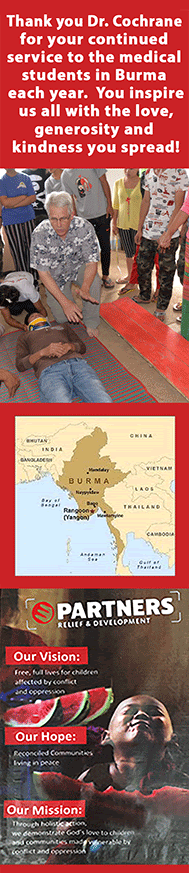
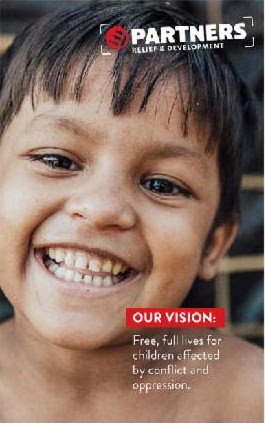 Creating happy memories for our children is one of my favorite Christmas traditions; but for many children around the world who face poverty and oppression this is a daunting task. In 2009 I was asked to help provide relief to the children of Burma through a Medic Training Program overseen by the Partners Relief and Development Organization whose vision is "Free, full lives for children by conflict and oppression". According to the World Health Organization, healthcare in Burma (also known as Myanmar) was ranked as the worst in the world in the year 2000. Although there have been some improvements since that time, according to the United Nations Office for the Coordination of Humanitarian Affairs, Myanmar still has over 241,000 people, mostly women and children, living in refugee camp conditions. Nearly half of these people remain displaced as a result of ongoing armed conflicts.
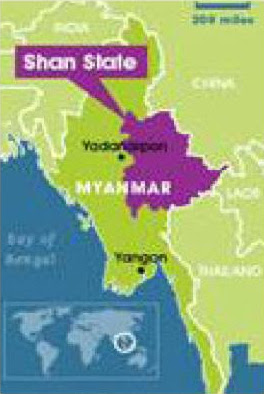 In response to this ongoing humanitarian crisis, Partners Relief and Development, a Christian Relief Agency, was asked to help provide a Medic Training Program in the Southern Shan State of Burma. Since 2009 I have traveled to Burma each November to participate in this program. I just finished my 10th trip where I was honored to participate in the training and the graduation ceremony on November 12th for the class of 2019 which included 28 Medic Students. Since the Medic program began, over 228 Medics have been trained. The program is managed by an amazing husband and wife Doctor Team from New Zealand who oversee the 8-month training program with the assistance of visiting teachers such as me.
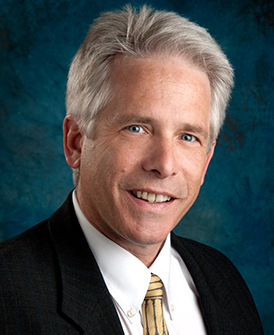
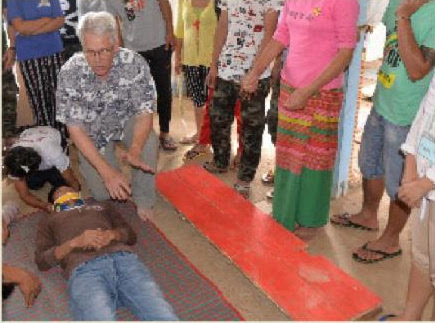 Dr. Cochrane training Medic students in the villages of Shan State where there has historically been no access to healthcare, these medics are now providing help and hope to their people and saving lives. Although they face incredible hardships, they are some of the happiest and most thankful people I have ever met. This year, during hospital rounds a patient who came in with suspected malaria suddenly lapsed into a coma and quit breathing. The students sprang into action immediately and following the training we have given them they put their skills to the test. After inserting an IV and administering emergency medications, the patient began breathing on his own again. He went on to regain consciousness and is expected to recover.