




 "Our nation owes a debt to its fallen heroes that we can never fully repay."
- Barack Obama
As we celebrated Memorial day 2020, the Covid-19 pandemic death toll in the United States approached the 100,000 mark. This is a staggering statistic and the pandemic has deeply disrupted every aspect of our lives including our work, our worship and the freedom to conduct every day activities such as attending school. In the beginning of the pandemic we did not know very much about how the disease spreads or the mortality rate. Fortunately, we have now seen a "flattening of the curve" and a dramatic slowing in the rate of spread of the disease. The first case of COVID-18 in the US was reported on 1/22/2020. Since then the country has reported 1,681,418 cases, and 98,929 deaths as of the writing of this article. According to the Johns Hopkins University Covid-19 website, this amounts to 30.2 deaths per 10,0000 population or a .03% overall mortality rate thus far which is much less than was feared woudl be the case. By way of comparison, the CDC estimated that approximately 80,000 people died of flu related causes during the 2017 flu season.
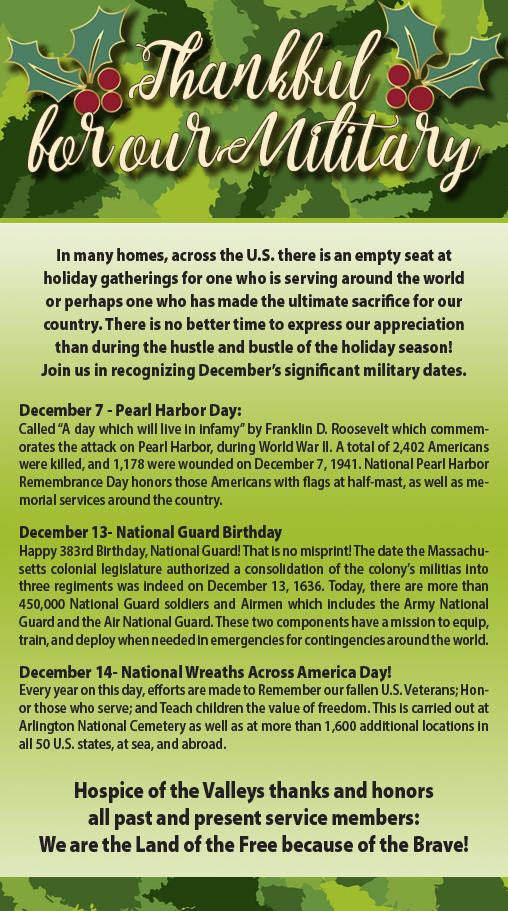
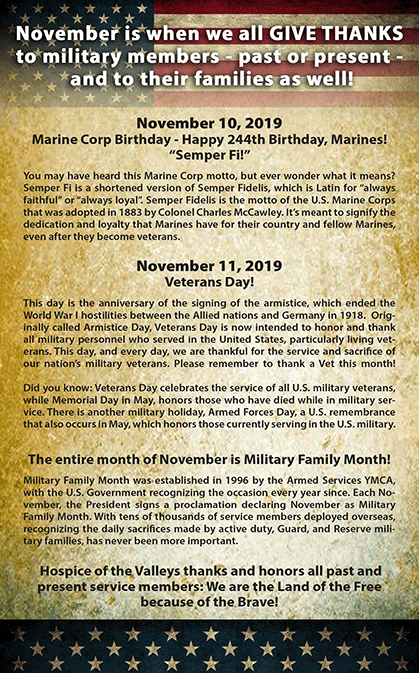
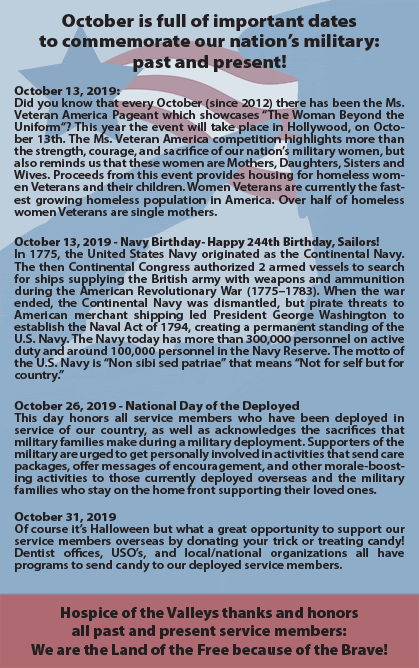
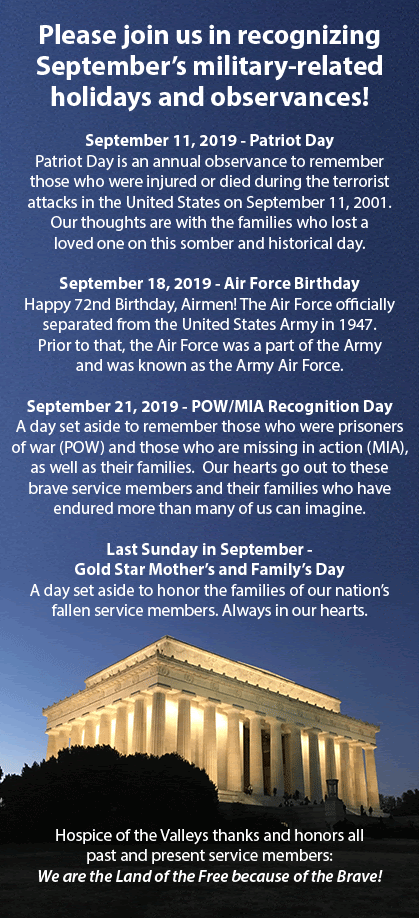
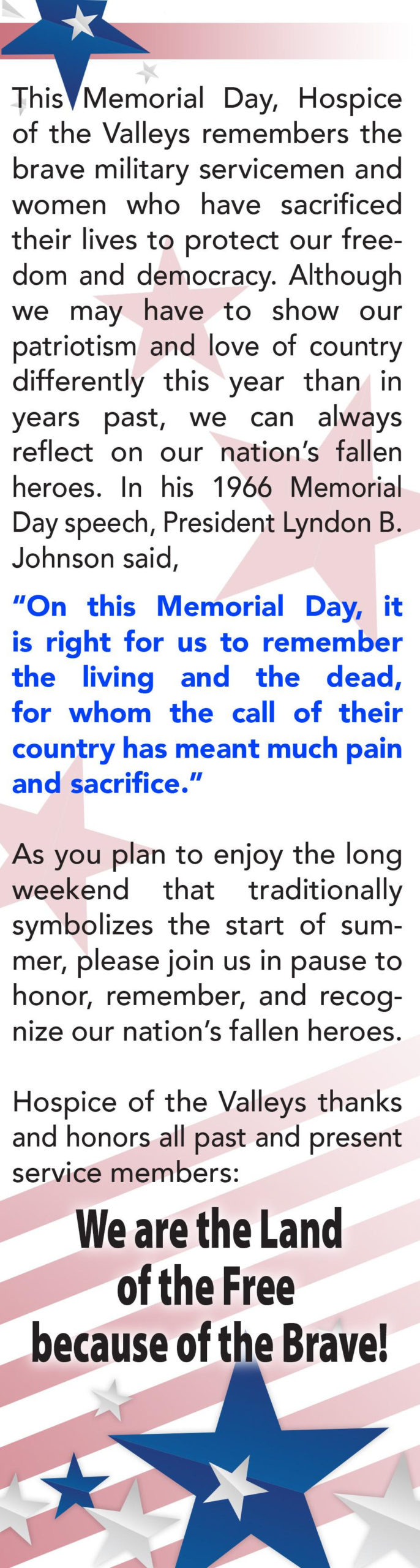
While any loss of life related to the Covid-19 pandemic is tragic, I was reminded during this Memorial Day weekend of the countless thousands of fallen heroes who sacrificed their lives to protect and defend the freedoms of which we ar now perhaps more keenly aware of. The Civil War, which was our deadliest conflict, ended in the spring of 1865 and had a devastating death toll of 650,000! Memorial Day traces its origins to "Decoration Day" which originated in the years following the Civil War as cities and towns would gather together to decorate the graves of fallen soldiers and pay tribute to them. In 1971 Memorial Day became recognized as a National Holiday set aside to honor all those who have died in the service of our Nation.
This year Memorial Day took on a new meaning for our family as our son Jared took his Officers Oath while accepting his Commission as a 2nd Lieutenant in the United States Army. This was both a joyful and solemn occasion as we pondered in a new way the sacrifices that America's sons and daughters are called to make in their service to our Country. I found myself experiencing a deeper sense of graittude for all those heroes who died so that I might enjoy the freedoms I so cherish. As the Covid-19 restrictions are lifted we are reminded once again that America is only the "Land of the Free"; because it is also the "Home of the Brave." If there is a silver lining to the dark cloud of Covid-19, perhaps it could be a new found sense of gratitude for the incredible freedoms we enjoy and a renewed commitment to remember and honor our fallen heroes to whom we owe a debt that we can never repay.






















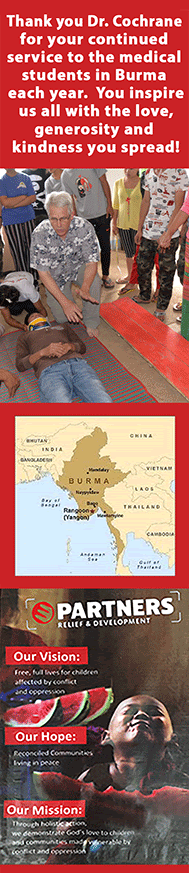
 Creating happy memories for our children is one of my favorite Christmas traditions; but for many children around the world who face poverty and oppression this is a daunting task. In 2009 I was asked to help provide relief to the children of Burma through a Medic Training Program overseen by the Partners Relief and Development Organization whose vision is "Free, full lives for children by conflict and oppression". According to the World Health Organization, healthcare in Burma (also known as Myanmar) was ranked as the worst in the world in the year 2000. Although there have been some improvements since that time, according to the United Nations Office for the Coordination of Humanitarian Affairs, Myanmar still has over 241,000 people, mostly women and children, living in refugee camp conditions. Nearly half of these people remain displaced as a result of ongoing armed conflicts.
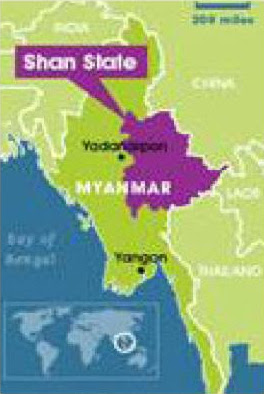 In response to this ongoing humanitarian crisis, Partners Relief and Development, a Christian Relief Agency, was asked to help provide a Medic Training Program in the Southern Shan State of Burma. Since 2009 I have traveled to Burma each November to participate in this program. I just finished my 10th trip where I was honored to participate in the training and the graduation ceremony on November 12th for the class of 2019 which included 28 Medic Students. Since the Medic program began, over 228 Medics have been trained. The program is managed by an amazing husband and wife Doctor Team from New Zealand who oversee the 8-month training program with the assistance of visiting teachers such as me.
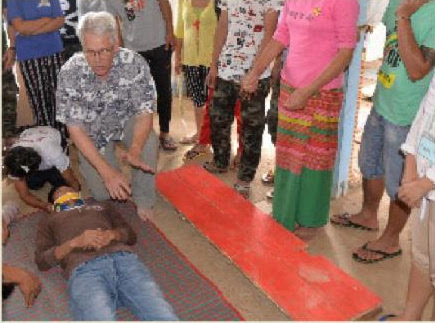 Dr. Cochrane training Medic students in the villages of Shan State where there has historically been no access to healthcare, these medics are now providing help and hope to their people and saving lives. Although they face incredible hardships, they are some of the happiest and most thankful people I have ever met. This year, during hospital rounds a patient who came in with suspected malaria suddenly lapsed into a coma and quit breathing. The students sprang into action immediately and following the training we have given them they put their skills to the test. After inserting an IV and administering emergency medications, the patient began breathing on his own again. He went on to regain consciousness and is expected to recover.